


What Brands Should Know About Airless Pump Bottles
Even the best formula can fall flat in the wrong packaging. When it comes to skincare with active ingredients, the bottle is part of whether the product works, right down to the last drop.
That is why the airless pump bottle has gone from a luxury extra to a near-standard choice for serums and creams. But before you pick one for your line, it helps to understand how the format works and what to weigh when sourcing.
The shift is real, too. The cosmetic airless packaging market was valued at $4.2 billion in 2024 and is expected to reach $8.5 billion by 2033, growing at a CAGR of 8.5%, according to Verified Market Reports. That growth is driven by demand for effective products and premium, preservative-light formulations. Here is what brands need to know.
How an Airless Pump Bottle Works
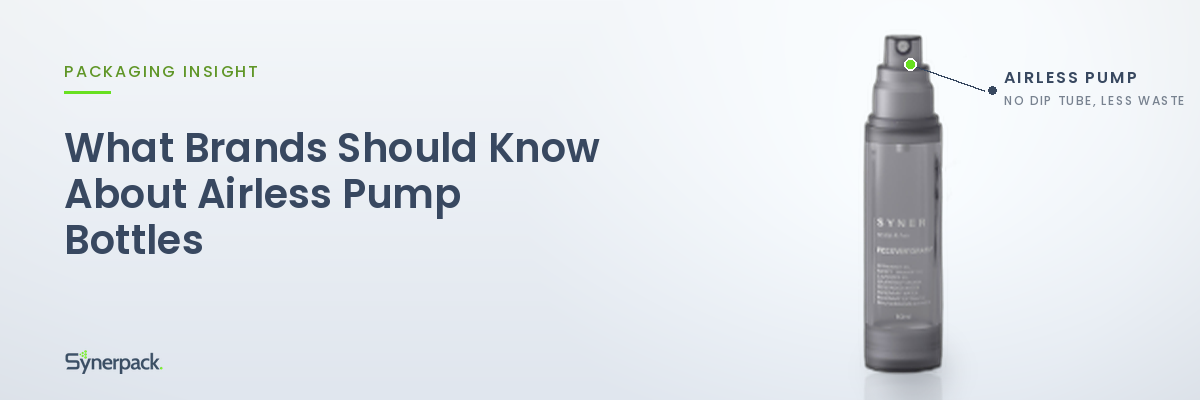
The idea is simpler than it sounds: air does not get in. A normal pump uses a dip tube, that little straw that pulls product up from the bottom. An airless pump bottle has no tube at all.
Instead, a piston at the base of the container moves slightly with each press, pushing the product up and out. As the piston rises, there is no rush of air filling the space behind it. The whole thing is a sealed, airless system.
Here is what that means in practice:
- Protects the formula. Less air exposure means less oxidation, keeping active ingredients stable for longer.
- Use nearly all the products. The rising piston pushes almost everything out, so very little gets stuck at the bottom.
- Consistent dose every time. Each press dispenses an even, measured amount.
- Works at any angle. With no dip tube, an airless pump bottle can dispense upside down or on its side.
Brands keep gravitating to this format because it pairs protection and efficiency in one package.
Why Brands Choose Airless Over Regular Pumps
So how does this option stack up against a standard pump? Both dispense products, but they protect them in very different ways. The airless pump bottles vs regular pump question comes down mainly to air exposure and waste.
Regular cosmetic pump bottles let air back into the bottle with every use, which can speed up oxidation. Airless designs seal that out. Here is the side-by-side:
| What matters | Regular Pump Bottles | Airless Pump Bottles |
| Air exposure | Air re-enters after each pump | Sealed, air stays out |
| Product waste | More left in the dip tube and base | Piston pushes out nearly all of it |
| Hygiene | Product can sit near the opening | Contents stay isolated from air and fingers |
| Works upside down | No, needs to sit upright | Yes, dispenses at any angle |
| Best fit | Stable formulas, budget lines | Actives, serums, premium products |
The honest trade-off is cost. Airless runs a bit more upfront. But for serums and formulas with active ingredients, the protection and reduced waste usually justify it, especially for premium positioning where every detail counts.
Which Products and Materials Fit Airless Best
Serums pair naturally with airless pumps, which is why you see them together so often. Think of vitamin C, retinol, and peptides. Their potent, sensitive ingredients break down quickly when exposed to air, and an airless seal keeps them stable and effective.
But serums are not the only fit. These formulas all work well in airless too:
- Vitamin C and retinol treatments. Highly reactive ingredients that need protection.
- Moisturizers and night creams. Especially those lights on preservatives, or natural.
- Eye cream. The controlled pump is ideal for smaller doses and delicate formulas.
- Creams and SPFs. Consistent dosing with a clean, modern look.
On materials, plastic (PP, PETG, and recycled PCR) is the lightweight, durable workhorse. Glass airless pump bottles add weight and a premium look, which suits high-end lines. Choose the material that fits your brand and price point.
The best airless pump bottles for skincare work because they get the combination of formula, size, and finish right. The leak-resistant sealed design also makes compact sizes ideal for airless pump travel bottles and on-the-go sets.
What to Know Before Sourcing in Bulk
Once you know airless is right for your line, sourcing comes down to a few key decisions.
- Size. Airless bottles range from about 15 ml to 120 ml. Serums, eye creams, and travel sizes tend to run smaller, from 15 ml to 30 ml, while moisturizers and lotions are usually larger, starting at 50 ml.
- Branding and finishing. Custom colors, matte or glossy finishes, metallic accents, and printed or embossed logos all help your bottle match your brand.
- Sustainability. Refillable airless systems and PCR materials are in high demand, helping brands cut waste and meet eco-conscious expectations.
- Test first. This step matters: not every formula is airless friendly. Very thick or particle-heavy products can have dispensing issues, so always ask for samples and test with your actual formula before a full run.
- MOQs. Most suppliers set a minimum in thousands. Buying airless pump bottles wholesale lowers your per-unit cost, and a seasoned supplier of wholesale airless pump bottles for cosmetics reduces the risk of pump failure or a poor formula fit. That is where Synerpack helps.
Conclusion
Airless pump bottles have earned their place for a simple set of reasons: they protect the formula, waste almost nothing, signal quality on the shelf, and give brands room to customize and go sustainable.
The trick is matching the right bottle to the right formula and testing it before you invest. Get that right, and an airless pump bottle can lift both your product performance and your brand’s perception.
Need help finding the right fit? Let Synerpack walk you through your custom and wholesale options for your products.
Frequently Asked Questions – FAQs
Q1. How do airless pump bottles work?
Airless pump bottles use a piston instead of a dip tube. When you press the pump, the piston at the base moves up and forces the product out. No air comes back in, so the sealed design protects the formula and dispenses at any angle.
Q2. Are airless pump bottles better than regular pumps?
Usually yes, for premium formulas or those with active ingredients. The airless pump bottles vs regular pump difference is air exposure: airless seals air out, which means less oxidation and waste. For steady, everyday formulas, regular pumps are cheaper and do a decent job.
Q3. What products are suitable for airless pump bottles?
Serums lead the list, along with vitamin C, retinol, moisturizers, eye creams, and SPF. These are some of the best airless pump bottles for skincare, since sensitive or reactive ingredients need protection from air and light.
Q4. Can I order custom airless pump bottles in bulk?
Yes. Most suppliers offer custom airless pump bottles with a minimum order and options for size, color, finish, and branding. Buying airless pump bottles wholesale lowers your cost per unit as you grow, and sampling first makes sure your formula dispenses properly.
Q5. What size airless pump bottle should I choose?
The 15 ml to 30 ml sizes suit serums, eye creams, and travel minis, while 50 ml to 120 ml work for moisturizers and lotions. The right size depends on your product, the dose per use, and how customers will use it.