


How Ultra Fine Mist Spray Bottles Work for Toners
Toner used to mean soaking a cotton pad and wiping it across your face. Much of that product never reached the skin. Most of it soaked into the pad instead.
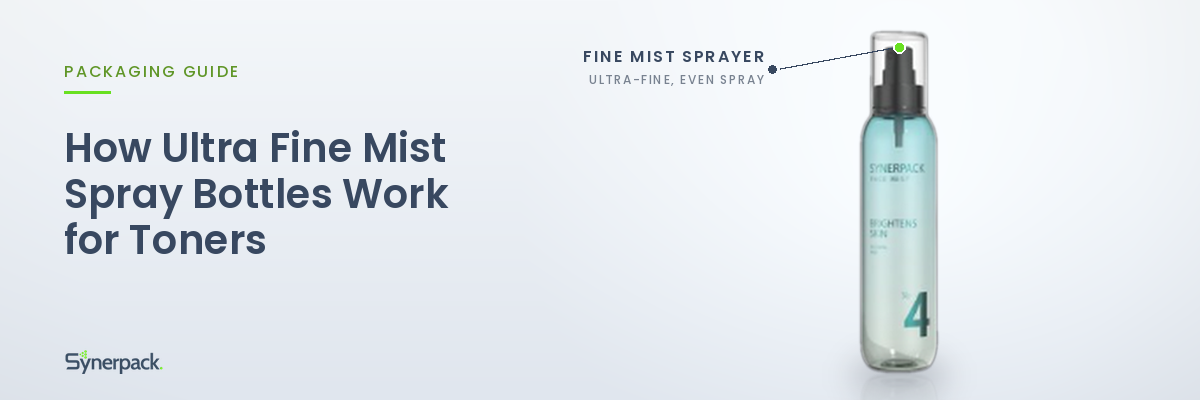
That is why so many beauty brands have moved toner into a spray, and not just any spray. They want an ultra-fine mist spray bottle that puts out a soft cloud of product, not a splat.
These sprayers are a fast-growing corner of packaging. The global fine mist sprayers market was valued at $1.8 billion in 2024 and is projected to reach $2.38 billion by 2030, growing at a CAGR of 4.8%, with personal care and cosmetics making up more than half of that demand, according to Deep Market Insights.
Brands keep reaching for these sprayers because they want lighter, more precise ways to apply skincare. So why is an ultra-fine mist so good for toners, and how do you choose the right bottle? Let’s take it apart.
Why Toner Works Better as a Fine Mist
A cotton pad has two problems: it wastes product and it tugs on your skin.
Every swipe pulls a little. For sensitive or irritated skin, that friction adds up. And the pad keeps most of the toner off your face to begin with.
A fine mist solves both problems at once. Here is what happens when toner leaves as a mist:
- Less waste. The product goes onto your skin, not into a pad.
- Even coverage. A thin, balanced layer settles in a soft haze, with no streaks.
- No tugging. The only thing touching your skin is the mist, so there is no friction at all.
- Better feel. A light spritz feels fresh and fast, which makes people reach for it more.
There is a hygiene win, too. A spray means no fingers or palms ever touch the formula, so the toner stays cleaner for the life of the bottle.
For a daily-use product like toner, those small wins add up. They are the difference between a product people love and the one they leave on the shelf.
How an Ultra-Fine Mist Spray Bottle Works
The magic is inside the pump. A few things happen fast when you press the actuator.
First, the pump builds pressure, squeezing the liquid in a small spring-loaded chamber. It then pushes that liquid up a dip tube and out to the nozzle.
The nozzle is the key part. It forces the toner through a tiny opening under high pressure, which breaks the liquid into thousands of tiny droplets. This process is called atomization.
The smaller the opening, the smaller the droplets. Smaller droplets mean a softer, finer mist that drifts onto the skin rather than hitting it.
A few parts work together to make this happen:
- The button you press is the actuator.
- The dip tube draws liquid up from the bottom of the bottle.
- The spring and chamber build pressure.
- The nozzle turns the liquid into a mist.
Many toner bottles also use a continuous misting pump. A single press gives you a steady spray for a second or two instead of one short burst, which makes for smoother, easier coverage.
What Makes a Mist “Ultra-Fine”
Not all mists are the same. The term “ultra-fine” comes down to droplet size and pump output.
Droplet size falls in the 70-to-110-micron range. That is small enough to feel like a fog, but large enough to settle on the skin instead of floating away.
Pump output matters just as much. Output is how much liquid is released with each press. For facial products like toner, the gold standard is a low dose of about 0.12 ml per spray.
A low output pushes the liquid harder through the nozzle, which raises the pressure and creates a finer, airier mist. Higher output does the opposite, pushing out more liquid in bigger, heavier drops.
So “ultra-fine mist” for toner usually means:
- A small nozzle opening.
- A low pump output of about 0.12 ml per spray.
- Droplet size in that 70-to-110-micron range.
Get this right and the mist feels light as air. Get it wrong and your “luxury toner” sprays like a garden hose. For a face product, feel is everything.
Choosing the Right Material: PET Vs Glass for Toner
Once the pump is sorted, the bottle material is the next big choice. For toner, the main options are PET plastic or glass. Both work, but they serve different goals.
PET is a clear, lightweight plastic. It is shatter-resistant and easy to carry, which makes it great for travel sizes and everyday use. A PET fine mist spray bottle keeps formulas stable and shows off the liquid inside.
Glass feels more premium. A cosmetic glass spray bottle has a heavier, high-end weight in the hand. Its rigid walls also hold pressure evenly, which can keep the mist consistent spray after spraying. Many brands choose glass for products that need to look luxe on a shelf.
Here is a quick way to think about it:
- Choose PET for lightweight, travel-friendly, shatterproof toner bottles.
- Choose a glass fine mist spray bottle for a premium feel, a heavier hand, and strong shelf appeal.
Size is a factor too. The 100 ml bottle is the most popular pick for toner and facial mist. It is big enough for regular use but still small enough to toss in a bag.
There is no single right answer. The best material depends on your brand, your price point, and where your customer will use the product.
What to Look for When Sourcing Wholesale
If you are a brand getting ready to launch a toner, the bottle is more than packaging. It is part of the product experience, so sourcing the right one matters.
Here is what to check when you look at wholesale fine mist spray bottles:
- Spray consistency. Ask for samples and test the mist. It should be even soft with every press, with no spitting or dripping.
- Leak-proof closures. A reliable cap locks the actuator and shields the nozzle, which keeps toner from leaking in transit or in a customer’s bag.
- Material quality. Confirm that the PET or glass is cosmetic-grade and safe for skincare formulas.
- Look for decoration options like silk screen printing, frosting, or labeling, so the bottle matches your brand.
- Quality control. Reliable suppliers run spray-pattern checks, leak tests, and pressure tests before shipping.
It also helps to work with a supplier who knows cosmetics. The right partner asks about your formula and how customers will use it, then matches you with a pump and bottle that fits.
Synerpack manufactures cosmetic packaging in Yuyao, China, a region known as a major hub for fine mist sprayer production. The factory is ISO 9001 certified and focused on the beauty market, so the team can help match the right bottle, pump, and finish your toner formula.
Conclusion
Toner has earned its spot in the skincare routine, and the ultra-fine mist spray bottle is what makes it feel so effortless.
A good mist wastes less product, spreads it evenly, and skips the tug of a cotton pad. The science behind it is simple: a small nozzle and a low-output pump break the liquid into a soft, weightless cloud.
When you are choosing a bottle, focus on the pump output, the droplet size, and the right material for your brand. Those three things shape how the toner feels in your customers’ hands.
If you are planning a toner launch and need help finding the right fine mist packaging, please contact the Synerpack team. We are excited to talk through your options.
Frequently Asked Questions – FAQs
Q1. What droplet size is best for a toner spray bottle?
For facial products like toners, a droplet size of about 70 to 110 microns works best. That range feels like a soft fog: fine enough to spread evenly, but heavy enough to land where you want it instead of drifting into the air.
Q2. Is glass or PET better for a fine mist toner spray bottle?
Both work well, so it depends on your goal. PET is lightweight, shatter-resistant, and ideal for travel sizes. A glass fine mist spray bottle feels more premium and holds pressure evenly for a consistent mist. Many brands use PET for everyday products and glass for high-end lines.
Q3. Why use a fine mist spray bottle instead of a regular spray bottle for toner?
A regular spray bottle pushes out larger, heavier drops that can feel wet and uneven. A fine mist sprayer breaks the toner into tiny droplets for a soft, even layer. That means better coverage, less waste, and a more comfortable feel on the face.
Q4. What size ultra fine mist spray bottle is best for toner?
The 100 ml size is the most popular choice for toner and facial mist. It holds enough product for regular use while staying small enough to carry in a bag. Smaller 30 ml to 50 ml sizes are ideal for travel and trial products.
Q5. Can wholesale fine mist spray bottles be customized for my brand?
Yes. Most cosmetic packaging suppliers offer decoration options like silk screen printing, hot stamping, frosting, and custom labeling. These finishes help your toner stand out on the shelf, and you can usually customize PET, glass, and aluminum bottles across a range of sizes.